تطورات العلاقات العراقية – التركية: قواعد عسكرية ومفاوضات استراتيجية
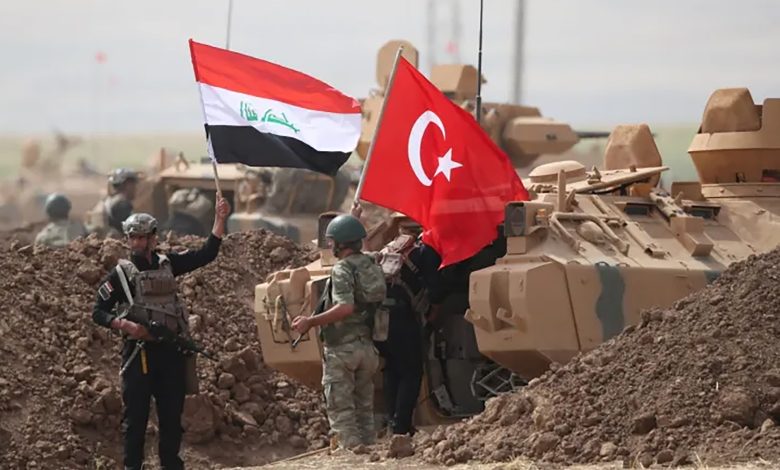
On June 26, 2024, the organization Christian Peacemaker Teams (CPT) reported that the Turkish army had penetrated Iraqi Kurdistan, deploying 300 tanks and armored vehicles in the Badinan area near Duhok over ten days. The report also noted the presence of 1,000 Turkish soldiers moving between the “Gare Barukh” and Metina bases, with newly established checkpoints.
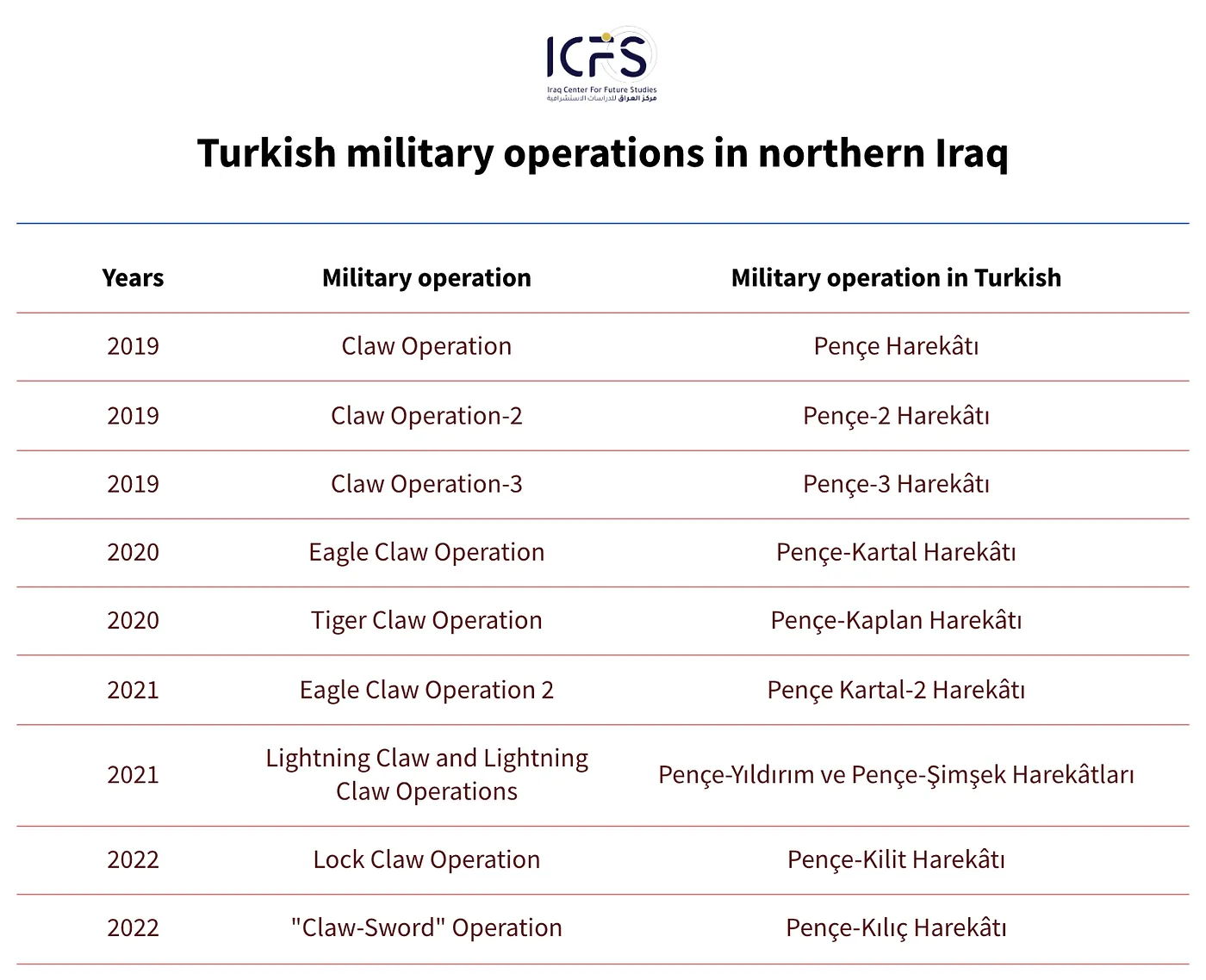
Since 1984 and 1992, Turkish armed forces have maintained a presence in northern Iraq, establishing contact points and military bases in different areas. Through operations such as the “Claw” campaigns, Turkey has deepened its military reach up to 40 kilometers inside Iraqi territory. Sources estimate that Turkish troop numbers in Iraq range between 2,500 and 10,000.
Unlike Syria, Turkey does not control areas under the Kurdistan Regional Government, with the exception of the Bashiqa base, established in 2015 to train Kurdish Peshmerga forces and Sunni Arab tribal fighters after the liberation of Nineveh from ISIS.
Despite repeated demands by the Iraqi central government to vacate the large Turkish base in Bashiqa (12 km northeast of Mosul), Ankara has refused, claiming that the base was established under a mutual agreement with the Kurdistan Regional Government.
At present, Turkey continues its cross-border operations in northern Iraq against the Kurdistan Workers’ Party (PKK), which it designates as a major national security threat.
Historical Context of Iraq–Turkey Relations
Turkey asserts its right to establish bases in Iraqi territory under bilateral security agreements. Since 1984, and particularly after the 1992 Kurdish civil war, several agreements between the two countries have addressed Turkish military presence against the PKK.
The most prominent modern agreement was signed on September 27, 2007, in Ankara by Turkish Interior Minister Beşir Atalay and Iraqi Interior Minister Jawad al-Bulani under Prime Minister Nouri al-Maliki.
This agreement allowed the Turkish army to pursue PKK fighters in northern Iraq with prior authorization from Baghdad and established liaison offices in both capitals to exchange intelligence and security information.
Reports indicate a growing scale of Turkish military operations, prompting Baghdad to consider new security arrangements with Ankara, including a potential buffer zone of 30–40 km inside Iraqi territory.
On August 15, 2024, Iraqi Foreign Minister Fuad Hussein visited Turkey with a high-level delegation that included PMF chief Faleh al-Fayyadh. The first meeting of the Joint Turkish–Iraqi Planning Group was co-chaired by Hussein and his Turkish counterpart Hakan Fidan to establish a joint security team for counterterrorism coordination.
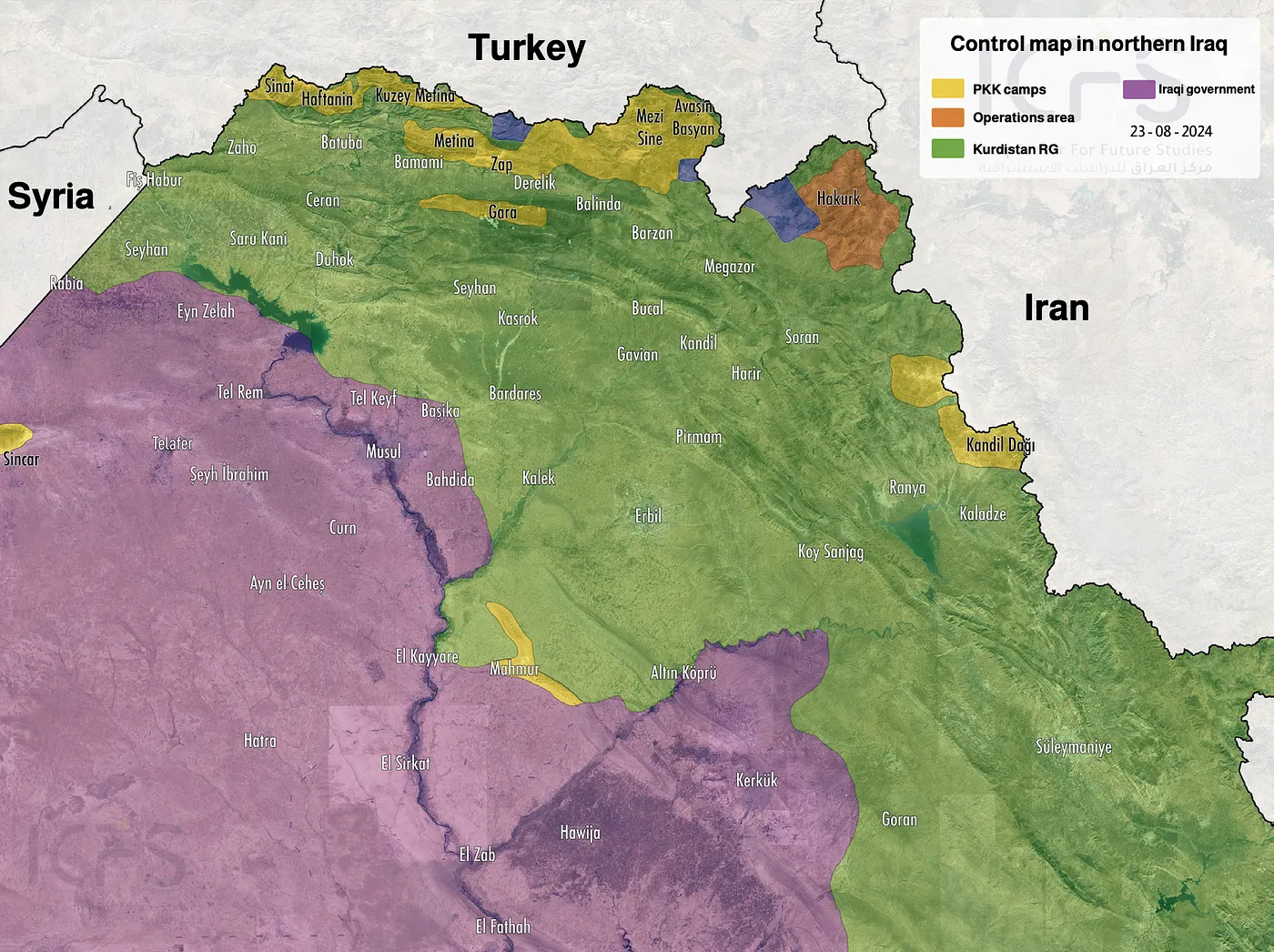
PKK Strongholds in Iraq
Key PKK bases in northern Iraq include:
- Hakurk (Duhok) – mountainous, repeatedly targeted by Turkish strikes.
- Metina (near Turkey’s border) – part of Qandil range, used as an operations hub.
- Zap (Duhok) – major operations base for PKK.
- Gara (Duhok) – difficult terrain, used for training and weapons storage.
- Avashin-Basyan (Duhok) – strategic corridor between Qandil and Gara.
- Sinat-Haftanin (Duhok) – rugged basin, key logistics hub.
- Qandil (Duhok) – the PKK’s main headquarters.
- Asos (Duhok) – remote mountainous outpost.
- Makhmour (Nineveh) – hosts a large refugee camp, significant for PKK recruitment.
These regions’ geography provides natural protection, making them long-standing strongholds for PKK operations.
Turkish Military Bases in Iraq
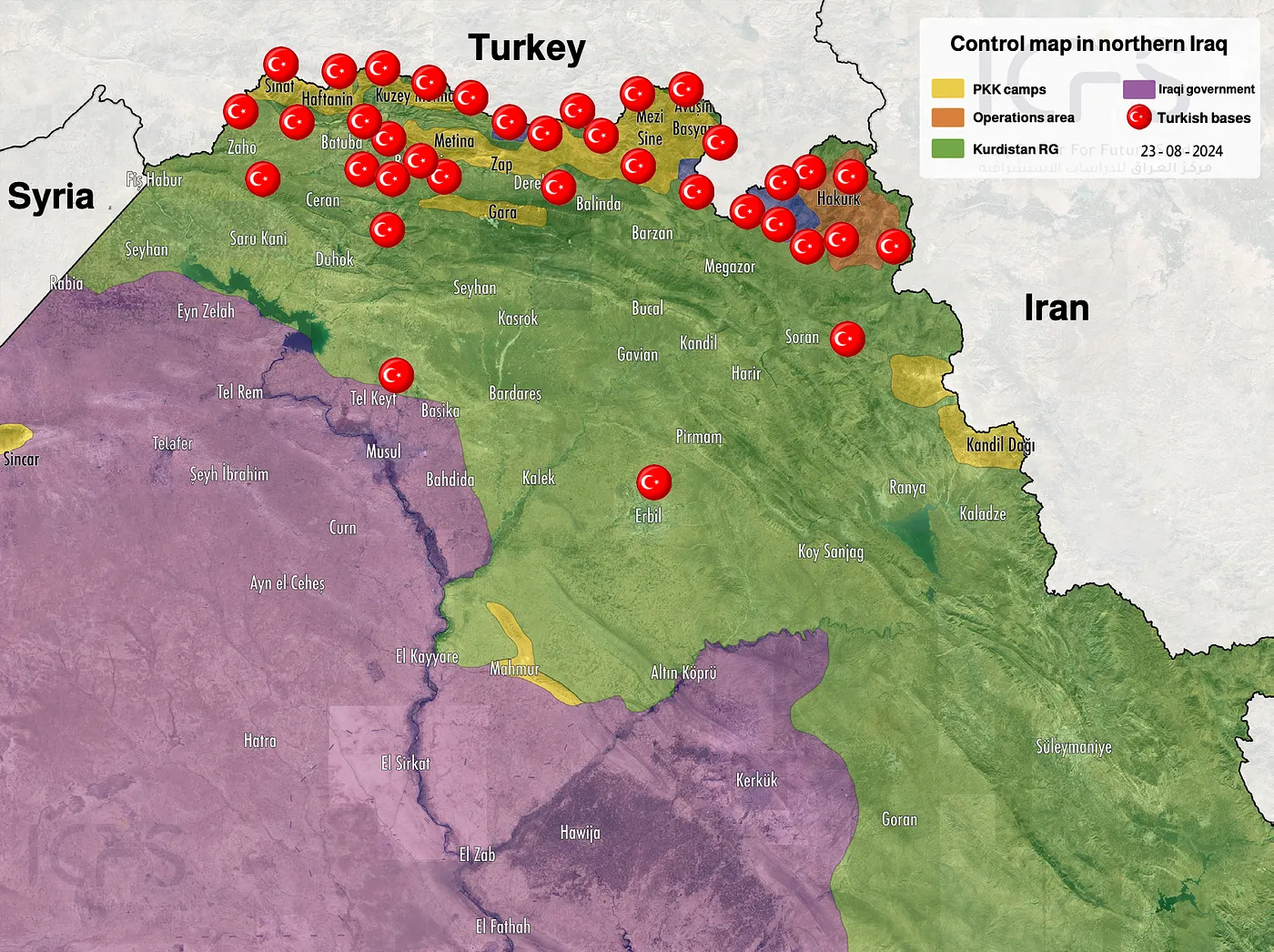
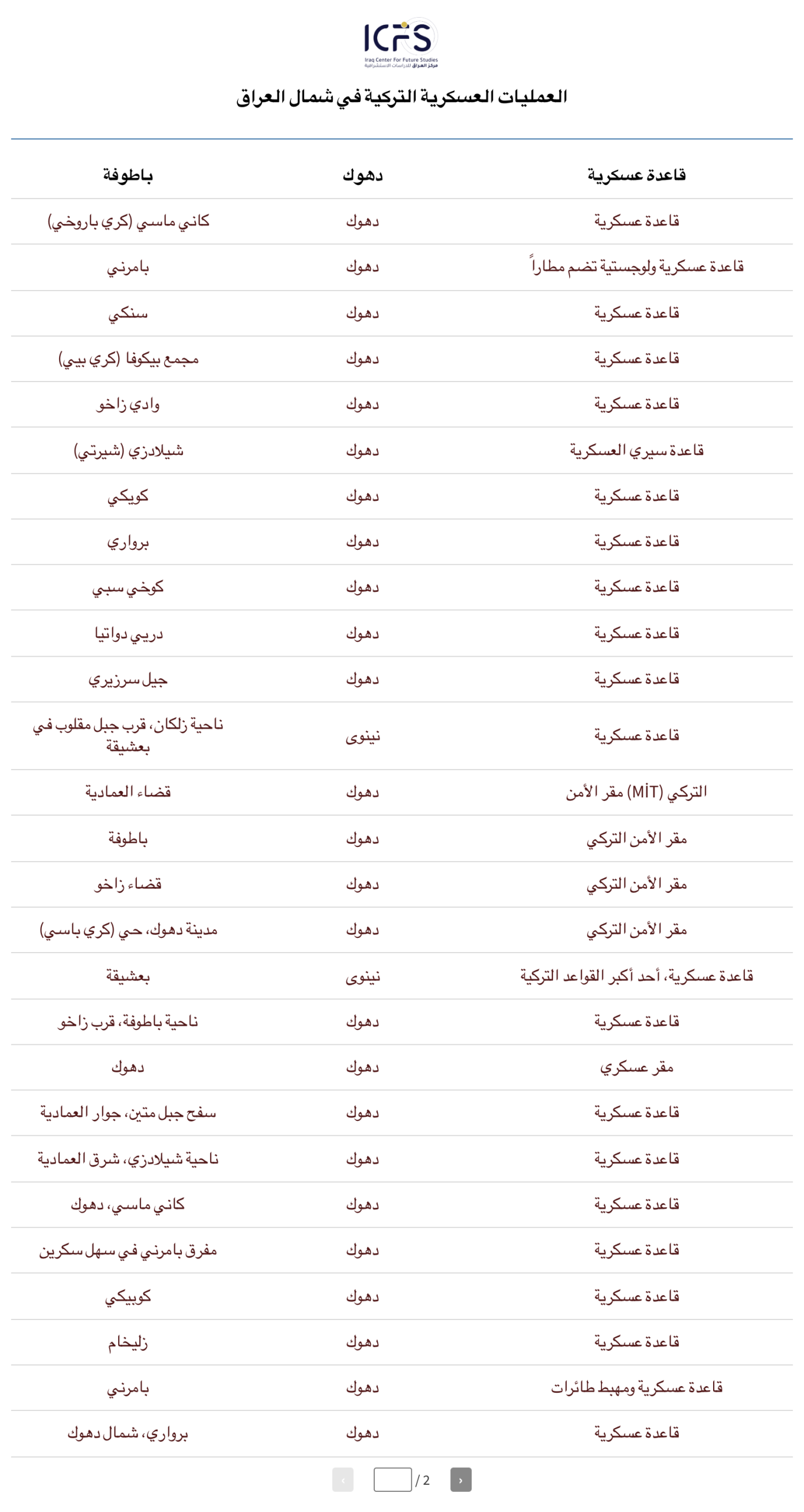
Since March 2018, Turkey has expanded its military footprint in the Kurdistan Region, adding new bases in Hakurk and Kani Rash. Turkish intelligence has operated in the region since 1997, and after Operation Hammer in the late 1990s, Ankara built bases in Bamiran, Shiladze, Batufan, Kani Masi, and other locations.
Additional bases were later established in Bashiqa, Soran, and Qalat Golan in 2014, while an older facility in Harir near Erbil was converted into a permanent base. Training camps were also set up in Zumar.
Currently, there are more than 50 Turkish military bases, checkpoints, and posts across the Kurdistan Region and Nineveh.
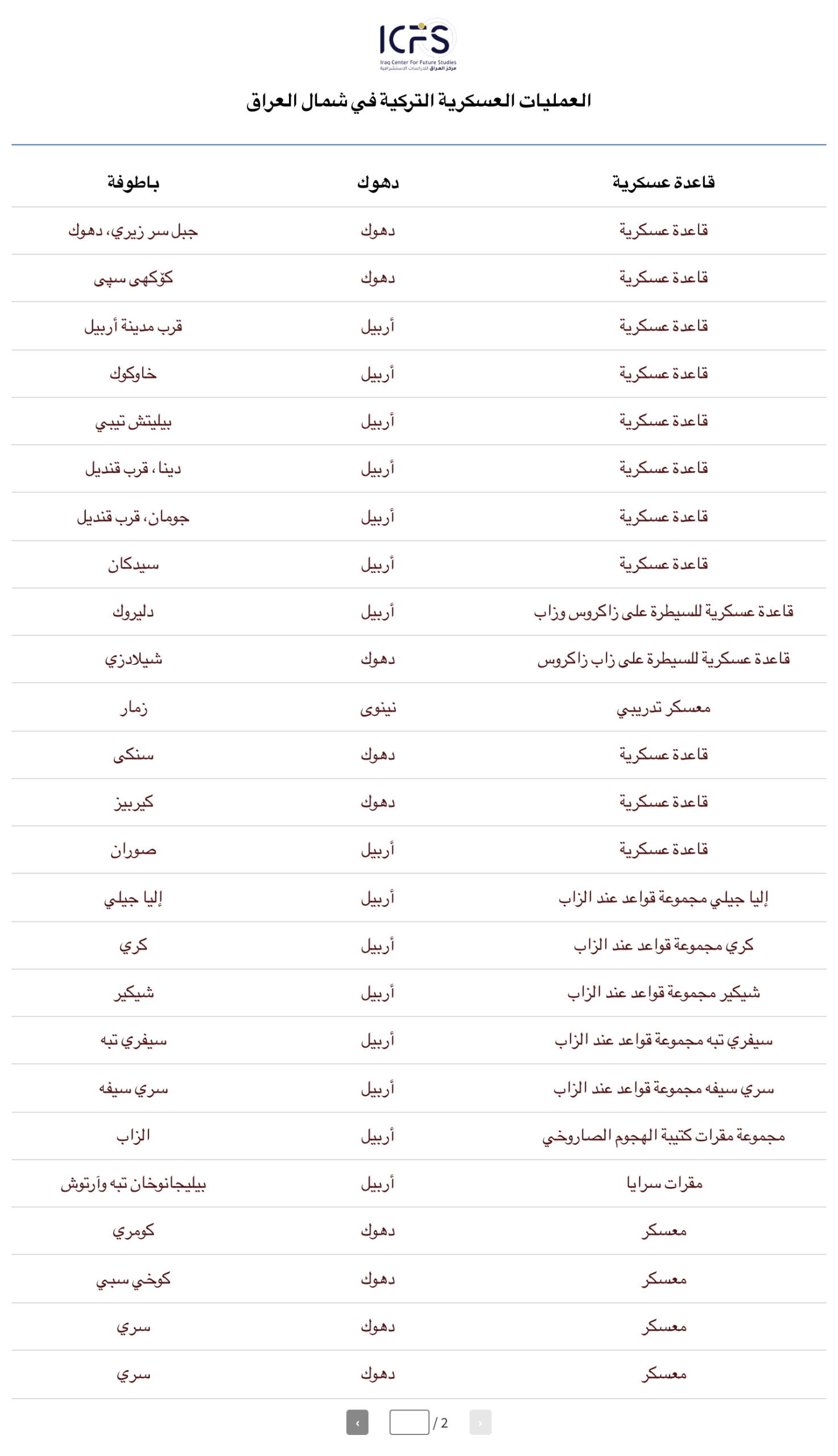
Turkish Military Operations
Operations include both air strikes (jet and drone strikes on PKK positions) and ground incursions (troop deployments, checkpoints, and searches up to 40 km inside Iraqi territory). Turkish targets typically include command centers, weapons depots, and supply routes, though reports have noted collateral damage in civilian areas.
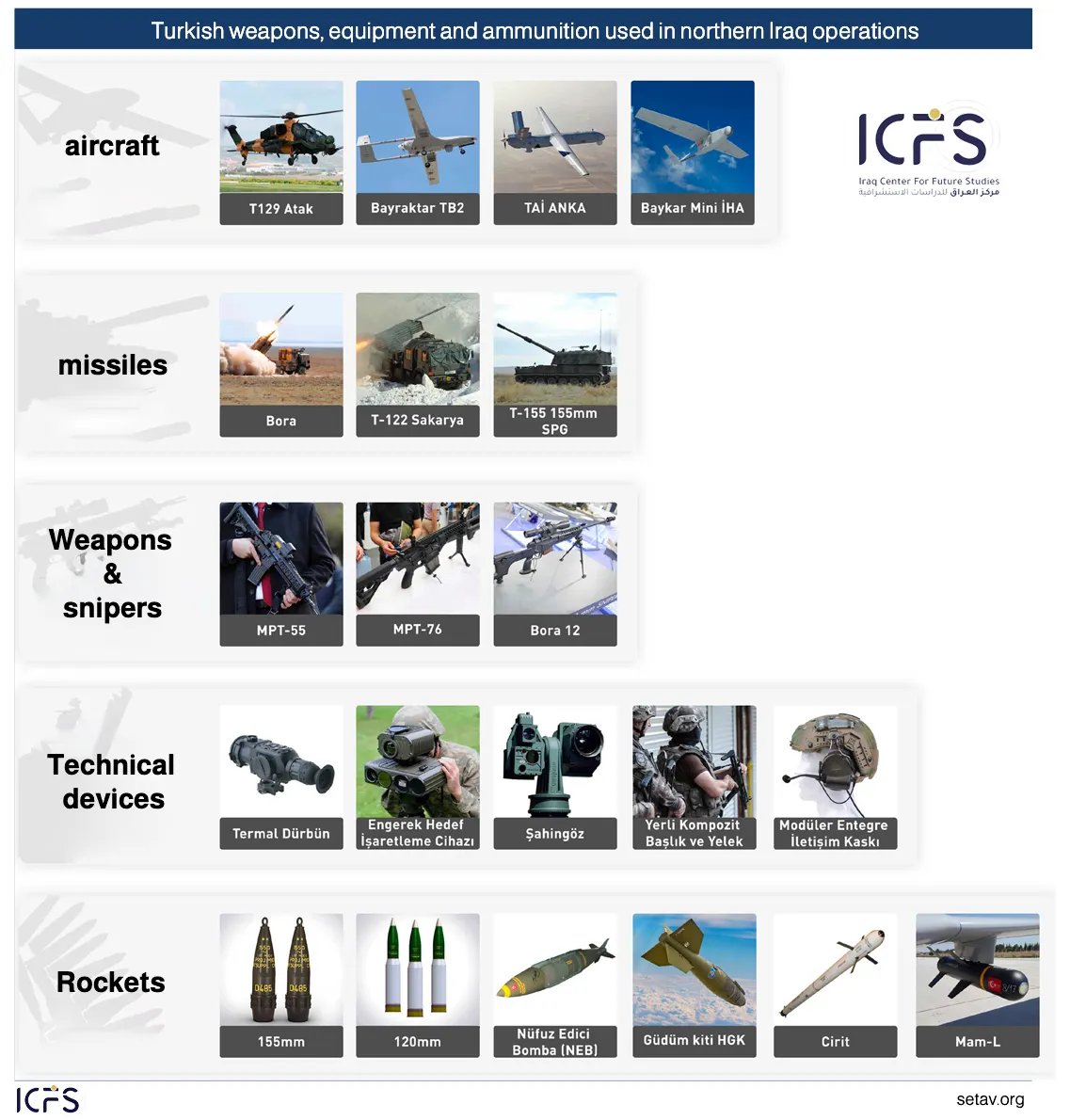
Weapons and Systems Used by Turkey:
- Drones: Bayraktar TB2 and Anka UAVs for precision surveillance and strikes.
- Heavy artillery: T-155 howitzers for long-range bombardment.
- Attack helicopters: T-129 ATAK helicopters for close air support.
- Small and medium arms: sniper rifles, machine guns, and ground support weapons.
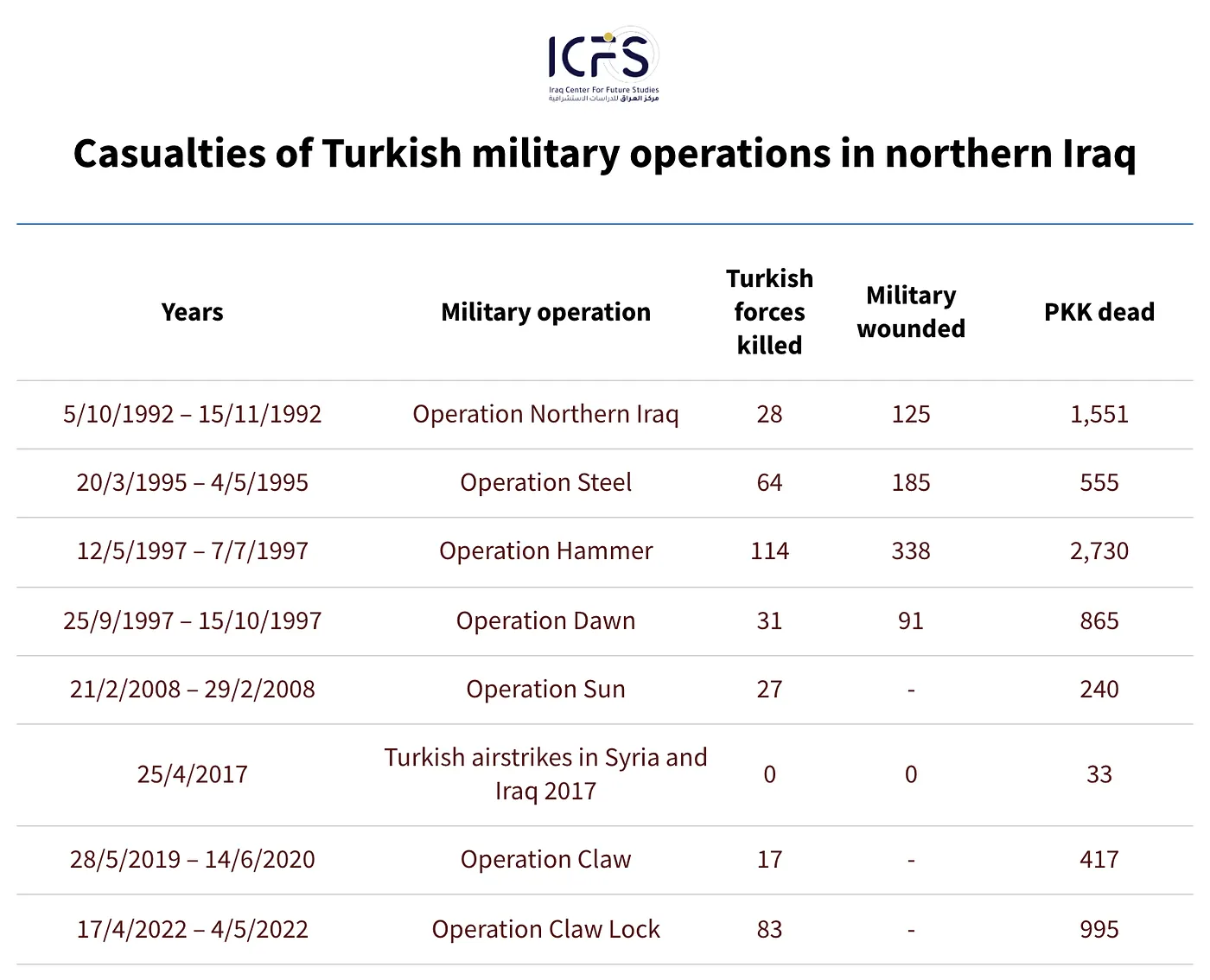
Turkish and PKK Casualties
- Operation Northern Iraq (1992): 28 Turkish soldiers killed, 125 wounded; PKK lost 1,551.
- Operation Steel (1995): 64 Turks killed, 185 wounded; 555 PKK killed.
- Operation Hammer (1997): 114 Turks killed, 338 wounded; 2,730 PKK killed.
- Operation Dawn (1997): 31 Turks killed, 91 wounded; 865 PKK killed.
- Operation Sun (2008): 27 Turks killed; 240 PKK killed.
- Airstrikes (2017): 33 PKK killed, no Turkish casualties.
- Operation Claw (2019–2020): 17 Turks killed; 417 PKK killed.
- Operation Claw-Lock (2022): 83 Turks killed; 995 PKK killed.
Total losses: 282 Turkish soldiers killed, 739 wounded; 6,417 PKK killed.
Iraqi Government Measures Against PKK
The Joint Iraqi–Turkish Planning Group was launched in August 2024 under the Strategic Framework Agreement signed during President Erdoğan’s April 2024 visit to Baghdad.
On August 1, 2024, Iraqi courts dissolved three Kurdish parties linked to the PKK (Freedom and Democracy of Ezidis Party, Ezidi Struggle Front, Kurdistan Society Freedom Party), citing national security concerns.
Reactions to Turkish Intervention
- Domestic: Iraqi Shiite parties and Iran-backed factions have occasionally supported PKK with resources, while many Iraqi politicians denounce Turkey’s presence as a violation of sovereignty.
- International: Russia labeled Turkish actions as a breach of Iraqi sovereignty; Iran expressed support for Iraq against Turkey; the UAE called for an Arab League emergency meeting; Arab League Secretary-General Nabil al-Arabi described Turkey’s role as “blatant.” UN officials also criticized Ankara’s military presence.
Conclusion
The June 2024 Turkish military incursion and expanded deployments highlight deepening tensions in Iraq–Turkey relations. Despite historical agreements like the 2007 Ankara security pact, Ankara’s refusal to vacate Bashiqa base and its continued operations against the PKK have intensified disputes.
Baghdad’s steps to curb PKK activities—such as banning affiliated parties—coincide with its effort to institutionalize security cooperation with Turkey through the joint planning group.
Nevertheless, Turkey’s entrenched military presence (50+ bases), coupled with its refusal to recognize Iraqi sovereignty over key security decisions, has drawn sharp criticism from Iraq, regional powers, and international organizations. These developments underscore the fragility of bilateral relations and the urgent need for broader regional and international mechanisms to manage escalating security and political crises.


